

How agencies keep brand consistency in AI images across clients
Agencies combine a brand file per client, reference or trained styles, isolated workspaces and client sign-off. Here is how the main tools compare.
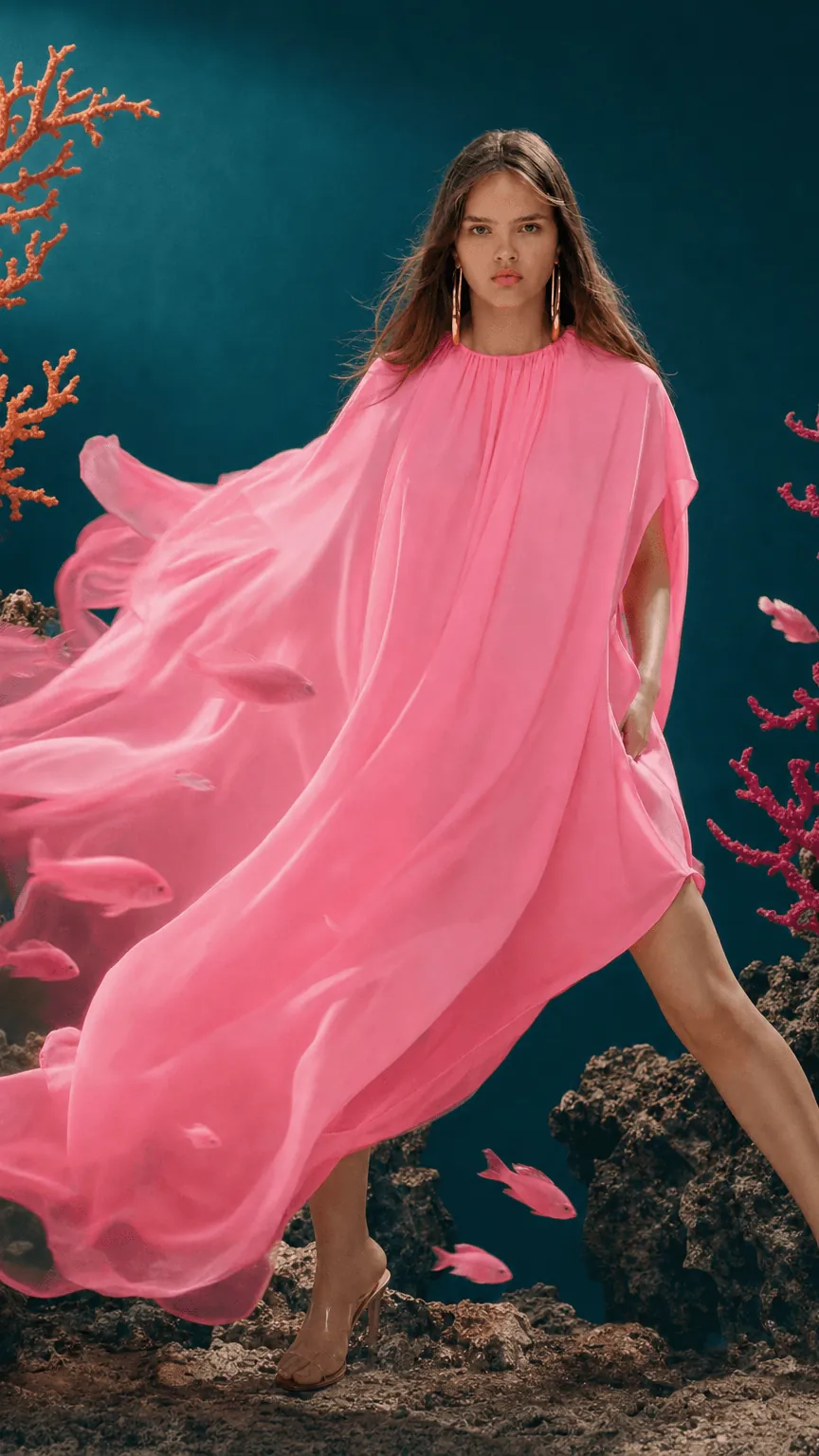
Agencies keep AI images consistent across clients by treating each brand as a separate, reusable set of inputs: a brand kit, reference images or a trained style, written rules, and a client approval step before delivery. No single setting guarantees it. Consistency comes from reusing the same inputs on every job and keeping one client's inputs from leaking into another's.
The four main approaches are a brand kit, style references, trained custom models, and a controlled workflow with isolated workspaces and review. Most agencies combine two or three of them.
Approach 1: a brand kit per client
The simplest layer is a stored brand file that is applied every time, so nobody retypes hex codes or lighting notes. Canva, for example, lets you create and manage up to 100 separate brands with Brand Kit, and its AI uses your Brand Kit and Brand Templates, covering colors, fonts, tone and signature style (Canva). It also lets you assign team members as approvers before designs are published.
This approach works well for layouts, logos, colours and typography. A brand kit does not by itself fix the photographic look of a generated image, such as light, grain, casting or mood. That needs references or training.
Miravela applies a kit the same way: logos, colours, references and rules are applied automatically to each generation, and agencies keep one folder per brand with roles and credit caps per member. The kit sits inside the generation step rather than in a separate design tool.
Approach 2: style references
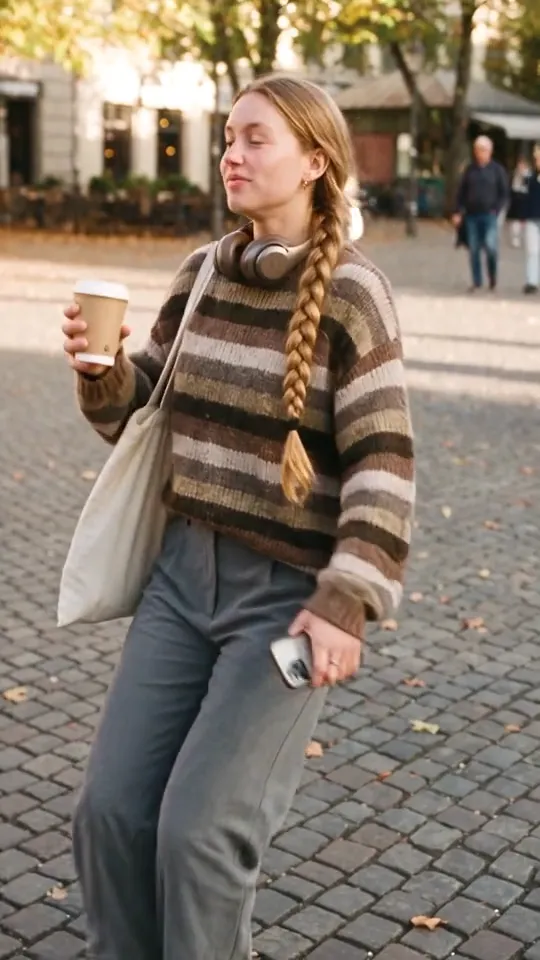
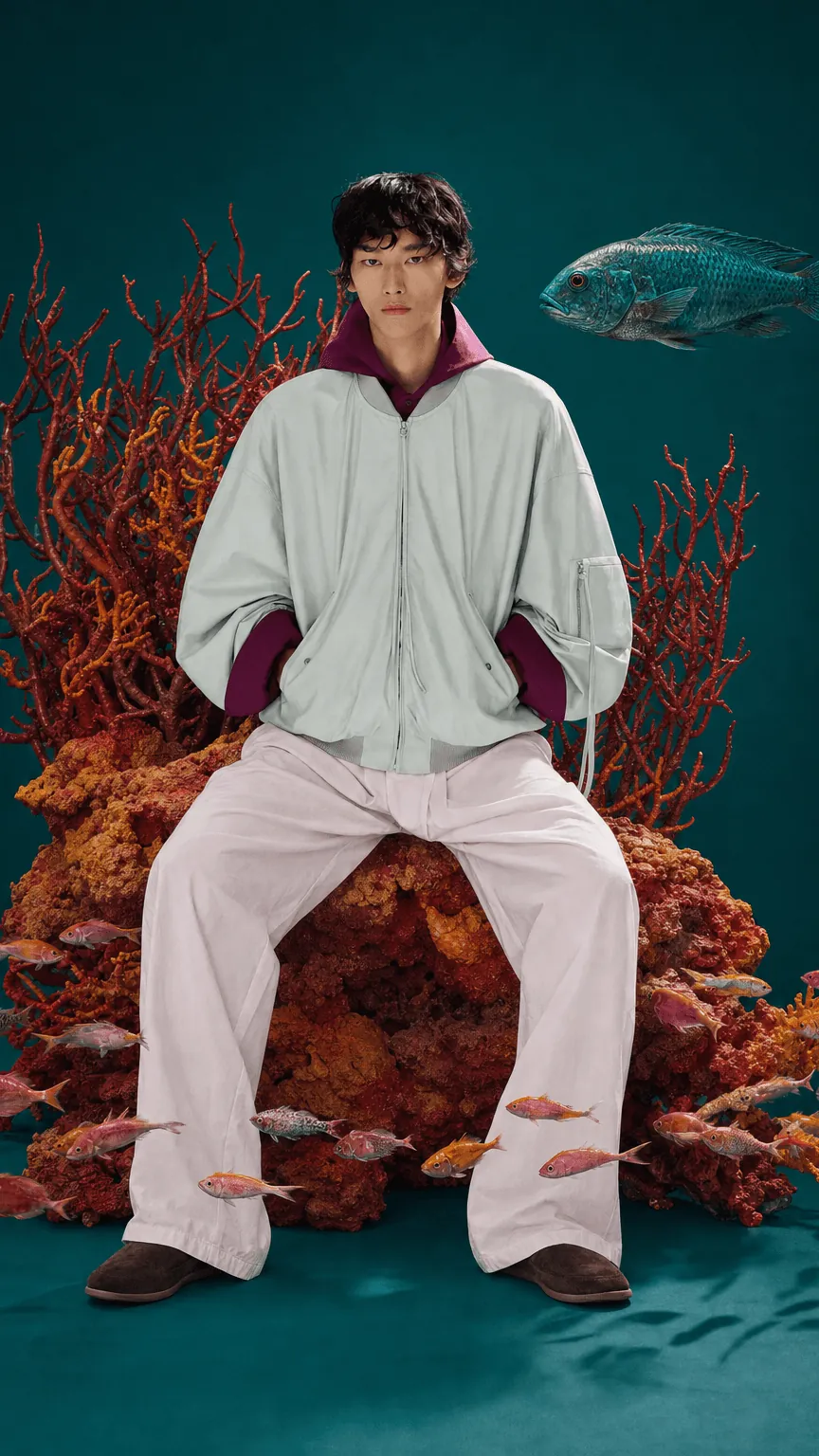
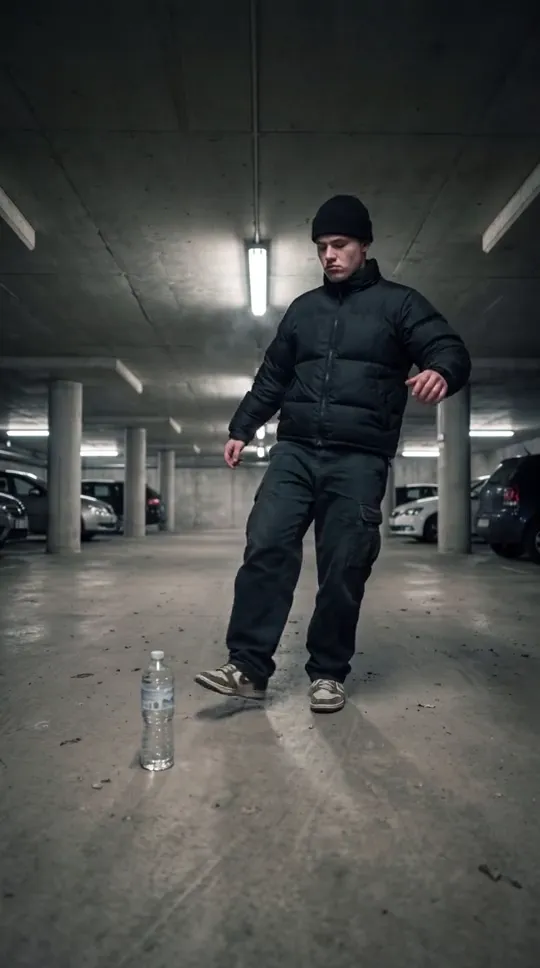
Style references are the lightest way to hold a look across a series. Midjourney's documentation says a style reference does not copy objects or people, only the overall style such as colours, medium, textures or lighting. You can also use the --sw parameter with style codes to adjust their influence (Midjourney docs).
The trade-off is that a reference captures one moment of a style. An independent guide notes that character consistency is a separate parameter from style (Prompt Architects). If a client needs the same model or product across a whole campaign, plan for that separately. Agencies using this method usually write down the exact reference and weight per client so any team member can reproduce the look.
Approach 3: trained custom models
When a client's look is distinctive and hard to describe, agencies train a model on the client's own images.
- Adobe Firefly Custom Models. Adobe says teams can fine-tune its models with their own assets, 10 to 20 images (Adobe press release). Custom Models require an enterprise license and Adobe storage for business (Adobe), and Adobe positions them for agencies: agencies use Firefly Services and Custom Models to deliver high-volume, on-brand content for clients (Adobe Firefly Enterprise).
- Leonardo Elements. Leonardo says you can train custom Elements (LoRAs) to achieve consistent aesthetics and maintain on-brand visuals. Free users can explore Elements, with paid plans unlocking higher limits (Leonardo.Ai). A review notes it doesn't guarantee perfect identity matching on every render (Success Tech Services).
Training pays off when a brand has an archive of consistent images to learn from. It is overkill for a client who sends a PDF and a mood board.

Approach 4: an isolated, reviewable workflow
Consistency also fails for operational reasons: files from client A end up in client B's folder, feedback arrives by email, and nobody can say which prompt produced the approved image. Agencies fix this with:
- one workspace or folder per client, with roles
- a single place where the client reviews and approves
- a stored record of the prompt behind every approved visual
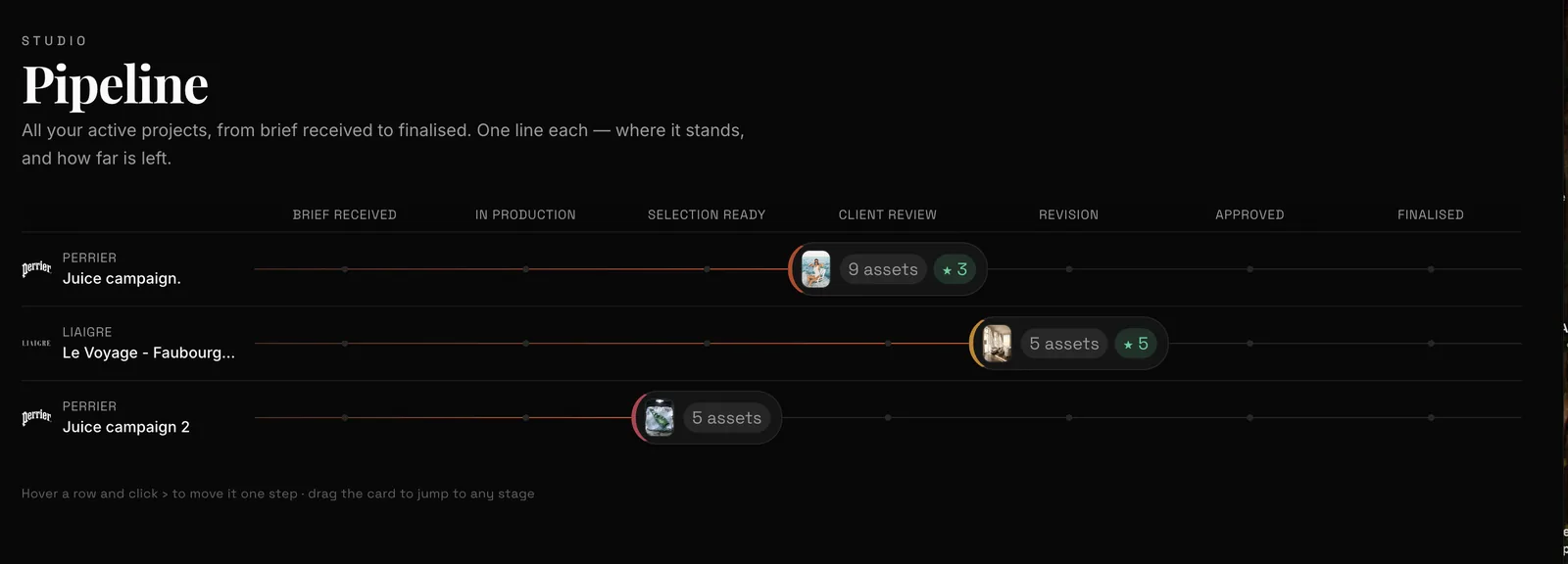
Miravela covers this part of the chain. Per its own description, each workspace is isolated from the others, and private client portals let the marketing lead or client review, comment and approve, with comments coming back inside the platform. Every deliverable is copied automatically to the subscriber's Google Drive, and the prompt history of each visual is kept and exportable. Miravela also states it never trains models on client content.
How the main options compare
| Tool | How it holds a look | Fits best |
|---|---|---|
| Canva Brand Kit | Stored colours, fonts, templates; up to 100 brands | Layout and design consistency, with approvers |
| Midjourney style reference | Reference image or style code, adjustable weight | Matching a look across a series of images |
| Adobe Firefly Custom Models | Fine-tuned on a client's assets; enterprise license | Large clients with archives and Adobe workflows |
| Leonardo Elements | LoRA training on a small image set | Brands needing a trained style or subject |
| Miravela | Brand kit applied automatically; per-brand folders; client portals | Agencies producing for several clients, brief to delivery |
Where Miravela fits, with platform data
Miravela is an AI image and video production platform built for brand teams and agencies, in beta since September 2026. It gives access to 12 image and video models under one subscription, and it picks one per job. It does not train a model per client, so if a trained, client-specific model is the requirement, Adobe or Leonardo is the better choice.
Platform data matters here because holding a look usually takes several runs. In Miravela's own database over the last 90 days, 8,544 generations were started and 7,307 of them were images. The most-used model, GPT Image 2, accounted for 3,074 generations, 95.9% completed, with a median time of 95 seconds. Nano Banana 2 had a median of 26 seconds and 89.5% completed. For an agency, this means model choice changes how many iterations you can do per hour. A faster model suits exploring a client's look, a slower one suits finals, and a small share of runs will need a retry. This is aggregated platform data, not a quality benchmark.
Pricing is in credits, in euros, with no per-model surcharge: Studio is €199/month, Signature €490/month (adds custom agents and your own branded instance) and Enterprise €1,790/month, all excluding VAT. Details are on the pricing page, and agency workflows are described on the agencies page.
How to choose
- Does the client have 10 to 20 consistent images and a distinctive look? Consider a trained model (Adobe, Leonardo).
- Is the look easy to describe or reference? A style reference or brand kit is enough.
- Do you need the same person or product across scenes? Test character or product references on a small batch first.
- How many clients run in parallel? You need separate folders, roles and credit caps per client.
- Who signs off, and where? Prefer a review step with comments tied to the asset.
- Do you need proof of creative input? Check that prompt history can be exported.
- Where is the data hosted, and is it used to train models? Ask each vendor in writing.
A practical test: generate the same 12-image batch for two different clients and lay the sets side by side. If each set reads as one brand and the two do not blur together, your setup holds.
Questions
- How do agencies stop one client's style leaking into another's?
- They separate inputs: one brand kit or trained style per client, separate folders with roles, and isolated workspaces. In Miravela each workspace is isolated from the others and agencies run one folder per brand.
- Do agencies need to train a custom model for each client?
- Not always. A brand kit plus a style reference is often enough for clients whose look is easy to describe. Training, such as Adobe Firefly Custom Models or Leonardo Elements, fits clients with a distinctive look and an archive of consistent images.
- How can an agency prove how an AI image was made?
- By keeping the prompt history for each visual and exporting it with the deliverable. Miravela keeps the prompt history of every visual and makes it exportable.
Sources
- Canva - The Home for Every Brand
- Style Reference – Midjourney
- Midjourney --sref Explained: Style References, Codes and Weights (2026)
- Adobe Introduces Firefly Services and Custom Models
- Adobe Firefly Custom Models
- Adobe Firefly Enterprise Solutions
- Train LoRAs for Consistent AI Image Generation
- Leonardo AI Review: Consistent Brand Visuals
- Miravela pricing
- Miravela for agencies